Best Teeth Whitening Options and What They Typically Cost
Teeth whitening can cost from a modest amount for at-home products to several hundred dollars for professional treatment at a dental office. The final cost depends on the method, the number of treatments, and whether a dentist needs to address sensitivity or other oral health concerns first. At-home kits with LED lights are best for shoppers seeking a guided routine; pens and gels suit targeted or simpler application. The products below offer different formats, but their current prices can change, so check the retailer listing for the latest cost.
| Option | Best suited for | Cost context |
|---|---|---|
| Dentist-supervised whitening | People seeking professional guidance | Often several hundred dollars; varies by office and treatment |
| At-home LED kits | People who want a kit with multiple components | Generally less than in-office treatment; product prices vary |
| Pens and gels | Targeted application or simpler routines | Typically a lower-cost format; check the package and seller |
iSmile LED Whitening Kit

Best for: Buyers who want a multi-part at-home kit with an LED light, tray, and separate gels. The listed package includes three 3 ml syringes of 35% carbamide peroxide gel, a remineralization gel, a universal mouth tray, and an LED activation light. The listing states that it provides 22 whitening treatments and describes the tray as medical-grade silicone with a universal fit and breathing vents.
The instructions specify applying a small amount of gel to the tray and using the light for 10 minutes. This detail may appeal to shoppers comparing treatment steps as well as kit contents. A limitation is that the provided product details do not establish how results will vary for an individual or confirm suitability for every user. Follow the product directions and seek dental advice if you have oral-health concerns.
Auraglow LED Whitening Kit
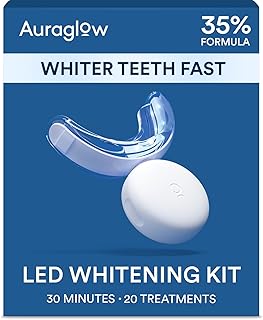
Best for: Shoppers comparing LED kits that use carbamide peroxide. The product name describes an LED accelerator light, 35% carbamide peroxide gel, and more than 20 treatments. It also advertises whitening up to 10 shades in seven days; that is a stated product claim, not a guaranteed result for every user.
This kit may be a better fit for buyers who want multiple applications rather than a single-use format. The provided information does not specify all included components or detailed directions, so review the current listing before purchase. Avoid choosing based solely on the advertised shade change; whitening outcomes depend on the person and the type of discoloration.
KTSAY Whitening Pens

Best for: Buyers who prefer brush-on gel for targeted application or touch-ups. This pack contains four 0.11-fluid-ounce pens. The product description highlights a fine-tip brush, mint flavor, and twist-to-dispense application, which can be more convenient than using a tray.
The listing says each pen provides more than 20 applications and describes the formula as low-sensitivity. Those are manufacturer claims rather than a promise of a particular result. Pens are a less comprehensive format than a kit with a tray and multiple gel syringes, and the supplied details do not give a specific treatment schedule. Follow the label directions, especially if you experience irritation.
MySmile LED Whitening Kit

Best for: Shoppers looking for an LED kit marketed around short sessions and stains from foods and drinks. The product name specifies an LED light, three carbamide peroxide gels, and a 10-minute treatment description. It names coffee, smoking, wine, soda, and food as stain sources it is intended to address.
Compared with a whitening pen, this option is better suited to someone who wants a kit-based routine. The provided details do not state the peroxide concentration, number of treatments, or all package contents, so check the seller information before comparing value. “Non-sensitive” in the product name should not be interpreted as a guarantee that no one will experience sensitivity.
Plus White Speed Whitening Gel

Best for: Buyers comparing a straightforward gel rather than an LED system. The product name identifies a 2-ounce tube and a five-minute whitening format. This may suit shoppers who want a simple product type and are willing to follow the package directions without a kit’s additional components.
The listed information does not describe the application method, active ingredient, or number of uses. Review the label to confirm how the gel is intended to be applied and how often it should be used. It may be a less suitable choice if you specifically want an included tray or light.
Buying Guide: How Much Does Teeth Whitening Cost?
What should you expect to pay?
In the United States, dentist-provided whitening commonly costs several hundred dollars, with the exact amount depending on the practice, treatment method, and whether custom trays or follow-up care are included. Over-the-counter products usually cost less, but the total depends on how many packages or refills you use. Ask a dental office for a written estimate, and compare the full treatment plan rather than one session alone.
Is professional whitening worth the extra cost?
Professional care provides an opportunity for a dentist to assess your teeth and gums and discuss an appropriate approach. It can be preferable when you have sensitivity, dental restorations, or uncertainty about the cause of discoloration. At-home options are generally more convenient for shoppers who want to manage their own routine, but they do not replace an exam when dental symptoms are present.
Which product format is the best value?
Compare the number of applications, amount of gel, included tray or light, and directions—not just the package price. Kits may bundle several components and treatments, while pens emphasize portability and targeted application. A gel tube may have fewer accessories, so confirm whether you need to supply a tray or another applicator. A lower upfront cost does not necessarily mean a lower cost per treatment.
What affects results and safety?
Whitening response varies with the cause and depth of staining. Crowns, veneers, and fillings may not whiten like natural teeth, so ask a dentist how treatment could affect the appearance of restorations. Follow product directions and stop use if you develop significant irritation or sensitivity. People with dental pain, gum problems, or existing oral-health concerns should ask a dental professional before whitening.
Frequently Asked Questions
How much does teeth whitening cost at a dentist?
Professional whitening often costs several hundred dollars, but fees vary by location, practice, and treatment plan. Request an estimate directly from the dental office.
Is at-home whitening cheaper?
At-home products generally cost less than dentist-provided treatment. The total depends on the product, how many treatments you use, and whether you buy refills.
Does insurance cover teeth whitening?
Whitening is commonly treated as a cosmetic service, so dental insurance may not cover it. Check your plan and ask the provider before scheduling.
Can whitening cause tooth sensitivity?
Some people experience temporary sensitivity or gum irritation. Follow the label directions, and consult a dentist if symptoms are severe, persistent, or occur before treatment.
Do whitening products work on crowns or veneers?
Whitening products may not change the color of crowns, veneers, or fillings in the same way they affect natural teeth. Ask a dentist before treatment if you have visible restorations.