Best Products to Help Reduce the Appearance of Skin Pigmentation
To help reduce the appearance of pigmentation, consider a topical product formulated for dark spots and uneven tone, and use sun protection as part of your routine. Good Molecules is best for a tranexamic-acid-derivative and niacinamide combination; The Ordinary is best for a simple alpha arbutin and hyaluronic acid formula; Topicals is best for a broader blend that includes azelaic acid and niacinamide. The list also includes a body cream and an oral supplement, which call for extra care when evaluating claims.
| Product | Best suited for | Key listed ingredients or format |
|---|---|---|
| Good Molecules Discoloration Correcting Serum | Uneven tone and dark spots | Tranexamic acid derivative and niacinamide |
| The Ordinary Alpha Arbutin 2% + HA | Targeted spot care with hydration | Alpha arbutin and hyaluronic acid |
| Topicals Faded Brightening Serum | Multiple types of visible discoloration | Azelaic acid and niacinamide |
| Dark Spot Remover Cream | Face and body application | Niacinamide and vitamin C |
| GlocalCare Depigma Capsules | People considering an oral supplement | Glutathione and plant extracts |
Good Molecules Discoloration Correcting Serum

Best for: People seeking a topical serum for the appearance of dark spots and surface discoloration. The listed formula pairs cetyl tranexamate mesylate, a stabilized tranexamic acid derivative, with niacinamide.
The product description says it helps dark spots look lighter and skin tone appear more even with continued use. This makes it a focused option for someone who wants a serum rather than a face-and-body cream or supplement. It was selected for its clearly stated brightening ingredients and specific emphasis on discoloration.
Limitation: The provided details do not specify how quickly results may appear or list an ingredient concentration. Avoid expecting an instant change; the claim is about continued use.
The Ordinary Alpha Arbutin 2% + Hyaluronic Acid

Best for: Buyers who want a defined concentration of alpha arbutin in a hydrating serum. The listed formula contains 2% purified alpha arbutin and hyaluronic acid, and is described as targeting the appearance of dark spots and uneven tone.
Compared with the Good Molecules serum, this product names alpha arbutin as its featured brightening ingredient and also highlights hydration. It was selected for shoppers who want a straightforward ingredient profile and a product positioned for radiance as well as visible spot care.
Limitation: The supplied product details do not state that it treats a medical cause of pigmentation. It is a cosmetic option for the appearance of uneven tone, not a diagnosis or treatment plan.
Topicals Faded Brightening Serum
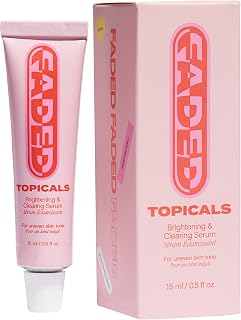
Best for: People looking for a serum described for post-blemish marks, dark spots, scars, and uneven tone. Its listed ingredients include azelaic acid and niacinamide, alongside antioxidants and ingredients described as inflammation-reducing.
The product description says the serum is dermatologist-tested and gentle enough for daily use, and states that it is suitable for all skin tones and ethnicities. It was selected because its stated uses cover several kinds of visible discoloration. Choose it if a multi-ingredient approach is more relevant than a single featured brightening ingredient.
Limitation: The product listing does not provide ingredient percentages in the supplied details. If your skin is sensitive, introduce a new topical gradually and stop if irritation occurs.
Dark Spot Remover Cream For Face And Body

Best for: Shoppers seeking one cream described for both facial and body areas. The listing names niacinamide and vitamin C and mentions use on areas such as the neck, chest, hands, elbows, inner thighs, and knees.
This product was selected for its broad stated application areas, which distinguish it from the serums above. It may suit someone who wants to address the appearance of uneven tone beyond the face. The listing describes daily use and claims it targets spots, freckles, and post-acne marks.
Limitation: The provided information does not give concentrations for niacinamide or vitamin C, or support the claim that the formula will be irritation-free for every user. Test cautiously before applying widely.
GlocalCare Depigma Capsules

Best for: Adults researching an oral supplement rather than a topical product. The listing names glutathione, Polypodium leucotomos, grape seed, and marigold extracts, and describes the capsules as an “inside-out” approach to skin tone.
This product was included because it is marketed for pigmentation concerns and offers a different format from the other selections. However, the listing’s statements about addressing internal imbalances, radiation, or permanently eliminating discoloration are marketing claims, not established outcomes in the information provided.
Limitation: Supplements can have risks and may interact with medications. Ask a healthcare professional before use, particularly if pregnant, nursing, taking medication, or managing a health condition. Do not rely on it instead of evaluation for changing or concerning spots.
Buying Guide: Choosing A Pigmentation Product
Which ingredients should I compare?
Compare the ingredients and product format that match your preference. The Ordinary lists 2% alpha arbutin with hyaluronic acid; Good Molecules combines niacinamide with a tranexamic acid derivative; Topicals lists azelaic acid and niacinamide; and the body cream lists niacinamide and vitamin C. Ingredient names alone do not establish which product will work best for an individual.
Do I need a face product or a body product?
Check the intended application areas. The cream is explicitly described for the face and body, while the three serums are presented for dark spots or uneven facial skin tone. Follow the product label and avoid applying a product to areas not specified by its instructions.
How should I approach a new topical?
Follow the label, introduce one new product at a time, and consider a small-area test first, especially if your skin is sensitive. Use broad-spectrum sunscreen during the day and reapply according to its directions; sun exposure can make discoloration more noticeable. A dermatologist can help identify the cause and discuss suitable options.
When should I seek medical advice?
Consult a clinician about a spot that is new, changing, painful, bleeding, or otherwise concerning. Persistent pigmentation or pigmentation that does not improve may also warrant professional advice, since different causes can require different approaches.
Frequently Asked Questions
Can skincare products completely remove pigmentation?
These products are described as helping improve the appearance of spots or uneven tone. The supplied information does not establish that any of them will completely remove pigmentation.
Which option includes a stated active concentration?
The Ordinary Alpha Arbutin 2% + Hyaluronic Acid is the only listed product here with a stated concentration for a featured brightening ingredient: 2% alpha arbutin.
Can I use more than one dark-spot product?
The product details do not establish a safe combination schedule. Introduce products cautiously, follow their labels, and ask a dermatologist or pharmacist if you are unsure how to combine them.
Are the capsules a substitute for topical care or medical advice?
No. The capsules are a dietary supplement, and their listing claims should not be treated as proof of treatment. Seek professional guidance for persistent or concerning discoloration.
Why is sunscreen relevant to uneven skin tone?
Sun exposure can contribute to visible discoloration. Sun protection helps limit further exposure while you use a product intended to improve the appearance of uneven tone.