Best Medical Grade Retinol Serums for Different Skin Care Needs
No single retinol serum is best for everyone, and “medical grade” is not a standardized category that guarantees a particular strength or result. Among these options, SkinMedica Retinol Serum 1.0 Complex and Paula’s Choice CLINICAL 1% Retinol Treatment are better suited to shoppers seeking a clearly stated high-strength formula. CeraVe is a gentler-featured option with hydrating ingredients, while The Ordinary and Amara Beauty list specific retinol concentrations. Start slowly, especially if retinol is new to your routine.
| Product | Best for | Listed formula details |
|---|---|---|
| CeraVe Retinol Serum | Gradual introduction | Encapsulated retinol, niacinamide, hyaluronic acid |
| SkinMedica Retinol Serum 1.0 | Experienced retinol users | High-potency retinol; concentration not stated in the provided details |
| Paula’s Choice CLINICAL 1% | Shoppers seeking 1% retinol | Retinol, peptides, vitamin C |
| Amara Beauty Retinol Serum 2.5% | Shoppers comparing a stated 2.5% formula | Retinol, hyaluronic acid, jojoba oil |
| The Ordinary Retinol in Squalane | Shoppers seeking 1% retinol with squalane | 1% retinol in squalane |
CeraVe Retinol Serum for Gradual Use
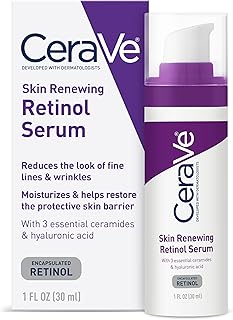
Best for: People looking to add retinol gradually, particularly those who value a formula with moisturizing and soothing ingredients. Its listed features include encapsulated retinol with MVE Technology, hyaluronic acid for hydration, and niacinamide to help calm and soothe skin.
The product is described as fragrance-free and non-comedogenic. The brand’s instructions say to apply it in the evening and build toward daily use as skin adjusts. That gradual-use guidance makes it a practical choice for a cautious introduction, though it does not state a retinol percentage in the supplied product details.
Limitation: Choose another option if knowing the exact retinol concentration is essential to your comparison.
SkinMedica Retinol Serum 1.0 Complex

Best for: Retinol users looking for an advanced formula positioned around skin renewal, fine lines, and texture. Listed features describe vitamin A derivatives and an antioxidant blend called PhytoShield Complex, intended to support skin texture while minimizing irritation.
The product is also described as helping improve the appearance of tone and dullness. It is selected for shoppers seeking a more advanced-style option with texture and radiance concerns in mind. However, the supplied features do not give a specific retinol percentage, so the “1.0” in the product name should not be treated as a confirmed concentration based on these details alone.
Limitation: A potent or advanced retinol may not be the right starting point for someone new to retinoids or prone to irritation.
Paula’s Choice CLINICAL 1% Retinol Treatment

Best for: Shoppers who want a formula explicitly described as 1% retinol and that also includes peptides and vitamin C. The product is marketed for the appearance of wrinkles, pores, firmness, and post-acne marks.
Its listed guidance says to use it at night and notes that it may be mixed with two to three drops of the brand’s Moisture Renewal Oil Booster. This option is a clearer concentration comparison than products whose supplied descriptions omit a percentage. The listing identifies it for normal, combination, dry, and oily skin, but that does not guarantee individual tolerance.
Limitation: The stated 1% strength may be too much for a new retinol user; begin cautiously rather than assuming daily use will suit your skin.
Amara Beauty Retinol Serum 2.5%

Best for: Shoppers comparing a product whose supplied features state a 2.5% retinol concentration. The formula also lists hyaluronic acid and jojoba oil, and is described as targeting the appearance of fine lines, wrinkles, dark spots, pores, and scars.
This serum is selected for its clearly stated concentration and inclusion of moisturizing ingredients. The product description claims visible changes in as little as 12 weeks, but individual outcomes and timelines can vary. A higher stated percentage is not automatically a better fit; tolerance, routine, and consistent use matter.
Limitation: Avoid choosing it solely because the stated percentage is higher; a strong formula can be harder for sensitive or retinol-new skin to tolerate.
The Ordinary Retinol 1% in Squalane
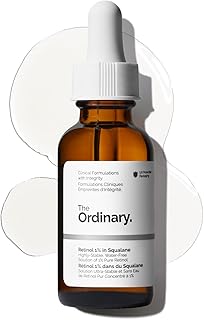
Best for: Buyers seeking a stated 1% retinol concentration paired with squalane. The listed features describe targeting the appearance of lines, wrinkles, and uneven texture, while squalane helps condition skin and address dryness associated with retinol use.
Compared with CeraVe, this product is a more direct concentration-based choice in the supplied information. Compared with Paula’s Choice, its listed supporting ingredient is squalane rather than peptides and vitamin C. It is selected for shoppers who want a simple comparison between retinol strength and a conditioning ingredient.
Limitation: The 1% concentration may not suit beginners or people who are sensitive to retinol.
Buying Guide: How to Choose a Retinol Serum
Does “medical grade” have a clear meaning?
“Medical grade” is a marketing phrase, not enough by itself to establish a product’s retinol strength, performance, or suitability. Compare the ingredient information and stated concentration instead. In this selection, Paula’s Choice and The Ordinary list 1%, and Amara Beauty lists 2.5%; the supplied details for CeraVe and SkinMedica do not specify a percentage.
Should you start with a high concentration?
Not necessarily. Retinol can cause dryness, redness, or irritation, particularly when introduced too quickly. If you are new to it, favor gradual use and follow the product’s directions. A lower or unstated strength is not a guarantee of zero irritation, and a higher percentage is not a guarantee of better results.
Which supporting ingredients should you compare?
Look at the whole formula, not only the retinol number. CeraVe lists hyaluronic acid and niacinamide; Paula’s Choice lists peptides and vitamin C; Amara Beauty lists hyaluronic acid and jojoba oil; and The Ordinary lists squalane. These ingredients distinguish the products, but they do not eliminate the possibility of irritation.
How should retinol fit into a routine?
Follow the specific product directions and introduce retinol gradually. Use it at night when directed, and avoid adding several potentially irritating new treatments at once. If irritation is persistent or severe, stop use and seek guidance from a qualified health professional. Retinol products are not interchangeable with prescription treatments.
Frequently Asked Questions
Is a medical-grade retinol serum stronger than a regular serum?
The label “medical grade” alone does not establish strength. Check whether the product states a retinol concentration and review its ingredient details.
Which product lists the highest retinol percentage?
Amara Beauty lists 2.5% in the supplied features. A higher percentage may also be more challenging to tolerate.
Which options state a 1% retinol concentration?
Paula’s Choice CLINICAL and The Ordinary Retinol in Squalane both list 1% retinol in the supplied product information.
Can beginners use retinol?
Some beginners choose retinol, but gradual introduction is important. CeraVe’s listed directions specifically recommend building up use as skin adjusts.
Can retinol cause irritation?
Yes. Dryness, redness, and irritation are possible, especially with frequent use or a strong formula. Follow the product directions and reduce or stop use if irritation occurs.