Best Magnifying Glasses for Trichomes: Top Portable and Digital Options
Choosing the right magnifying glass for examining trichomes is essential for growers, collectors, and enthusiasts aiming for precision and clarity. This guide reviews the best magnifying tools designed specifically for trichome inspection, featuring portable digital microscopes, jewelers loupes, and handheld magnifiers with lighting options. Below is a comparison table summarizing their key features for quick reference.
| Product | Magnification | Lighting | Screen | Portability |
|---|---|---|---|---|
| TOMLOV P10 Microscope | 100X Fixed | LED light | 2″ LCD Screen | Lightweight, 3.9oz |
| AC Infinity Jewelers Loupe | 30x & 60x Dual Lenses | LED light | No screen | Compact pocket size |
| JMH Magnifying Glass with Light | 30X Optical | 18 LED, 3 Modes | No screen | Handheld |
| MAXLAPTER Pocket Digital Microscope | 100X Fixed | LED light | 2″ IPS Screen | Compact, 3.9oz |
| T TAKMLY USB Digital Microscope | Up to 500X | LED light | 2″ IPS Screen | Portable with USB |
TOMLOV P10 Microscope for Trichome Viewing

The TOMLOV P10 Microscope is a handheld digital microscope perfect for trichome inspection thanks to its 100X fixed magnification and visible 2″ LCD screen. Its portable design weighs just 3.9 ounces, making it ideal for hobbyists and professionals alike. Featuring a bright LED light, it allows detailed viewing of plant trichomes and small objects such as coins or jewelry. Operation is straightforward—power it on and position it approximately 0.3 inches from the object for a clear image. This model suits both adults and kids, providing accessible magnification with image sharing capability.
AC Infinity Jewelers Loupe with Dual Magnification

The AC Infinity Jewelers Loupe offers dual lenses with magnifications of 30x and 60x, providing versatility in examining trichomes, stamps, coins, and jewelry. Its durable construction combines plastic housing with an aluminum case, ensuring long-lasting usage. The integrated LED light enhances clarity in low light, allowing for detailed scrutiny of plant buds and tiny structures. As a pocket-sized magnifier with lightweight design, it’s well suited for on-the-go inspections.
JMH 30X Handheld Magnifying Glass with LED Lighting
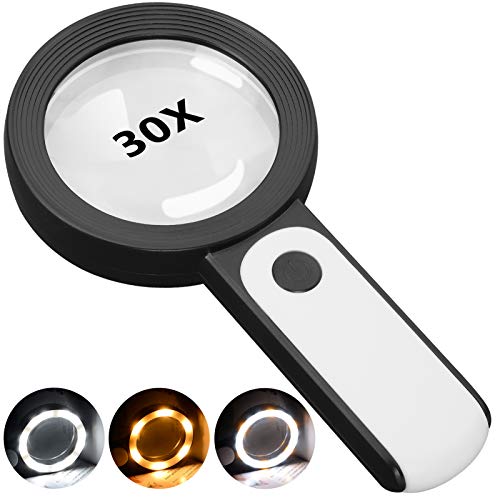
The JMH Magnifying Glass provides 30X optical magnification combined with 18 built-in LED lights featuring three adjustable modes: cold, warm, and mixed. This lighting customization reduces eye strain and improves visibility whether viewing indoors or in dark conditions. The device is easy to use and designed for seniors or users with low vision but also works well for trichome examination. It requires three AAA batteries and is ready to use with a simple on/off switch, making it an intuitive choice for high-powered magnification needs.
MAXLAPTER 100X Pocket Digital Microscope
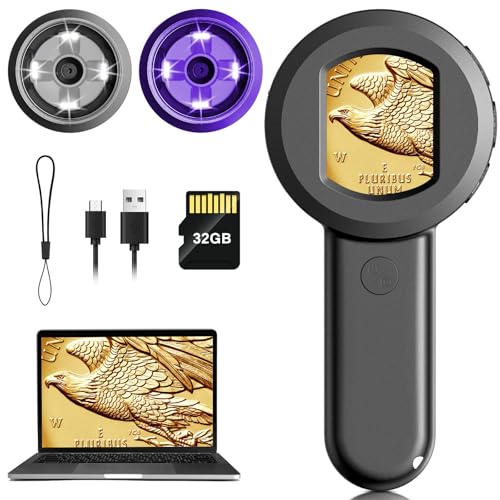
The MAXLAPTER Pocket Digital Microscope offers a 100X fixed magnification displayed on a 2″ IPS screen with LED lighting for vibrant, clear inspection of trichomes, coins, and jewelry. This mini microscope weighs just 3.9 ounces for portability and is ideal for both children and adults cultivating interest in scientific discovery. Its compact design makes it suitable for indoor and outdoor exploration, enabling detailed study of plant buds and other minute details while on the move.
T TAKMLY 500X USB Digital Microscope with 2″ Screen

The T TAKMLY USB Digital Microscope provides ultra-macro magnification up to 500X with a 2.0 inch IPS color screen, enabling detailed digital examination of trichomes and other small objects. It supports connection to Windows and Mac computers via USB, allowing direct viewing, photo capture, and video recording on a larger screen. The fixed-focus camera is best suited for flat objects and requires careful handling to avoid blurring. It’s a versatile tool for detailed botanical study, although not recommended for soldering or fast-moving subjects.
Buying Guide: Choosing the Best Magnifying Glass for Trichomes
Selecting the right magnifying glass for trichome inspection depends on several important factors. Consider the following to make the best choice for your needs:
Magnification Power
Magnification is critical. Trichomes are tiny, so higher magnification (like 100X or more) helps reveal their detailed structure. Digital microscopes often provide fixed high magnification, while jewelers loupes may offer multiple zoom options such as 30x and 60x.
Illumination and Lighting
Good lighting is essential to enhance visibility and color differentiation of trichomes. LED lights are common and provide consistent illumination. Some magnifiers offer adjustable lighting modes (warm, cool, or mixed) to reduce eye strain and provide natural viewing conditions.
Display Type
If you want to view and share images, choose a digital microscope with an integrated screen. A 2-inch LCD or IPS screen can display real-time images clearly, allowing more detailed examination and easier documentation.
Portability and Ease of Use
For growers and hobbyists moving between gardens or inspection areas, lightweight and portable models are preferable. Handheld magnifiers or pocket-sized digital microscopes are convenient and easy to operate for all ages.
Connectivity and Storage
Some digital microscopes offer USB connectivity for computer viewing, photo capture, and video recording, providing an advantage for detailed analysis and record-keeping. Ensure compatibility with your operating system if this feature is important.
Object Type and Viewing Distance
Consider the focus capability—fixed focus is common for trichomes but requires careful distance maintenance. Adjustable focus and zoom controls offer more flexibility for uneven surfaces or different objects.
Durability and Build Quality
A magnifier with a sturdy build material, such as metal casing in loupes, adds durability for outdoor use. Foldable or covered lenses protect the optical glass and enhance lifespan.
By weighing these features—magnification, lighting, display, portability, connectivity, and build quality—you can select the ideal magnifying glass to accurately inspect and evaluate trichomes in your cannabis cultivation or collection efforts.